 CityBuddy
 English
Things to Do in Marrakesh, Morocco
Photo made by Andrea Koelink on Pexels.com
When to visit
Plan your perfect trip to Marrakesh, Morocco
Get a complete travel plan built just for you in under 30 seconds, with daily routes, local food tips, budget estimates and more.
Are any of these especially important to you?
Select all that apply
Plan language: EnglishMost popular attractions in Marrakesh, Morocco
One of the top activities in Marrakesh, Morocco is exploring Jemaa el-Fnaa, a vibrant market filled with storytellers and food vendors. Be sure to visit the Koutoubia Mosque, home to the tallest minaret in the city at 77 meters, which can be seen from afar. Also, the Bahia Palace is not to be missed, showcasing 19th-century artistry with detailed decorations and beautiful gardens.
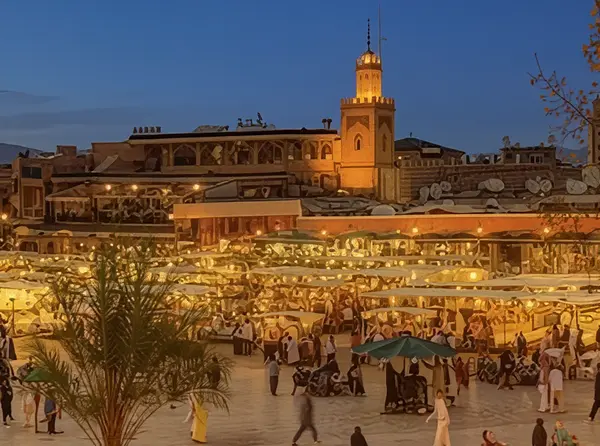
1. Jemaa el-Fnaa
The vibrant heart of Marrakech where culture bursts in vivid colors. Street performers, smoky food stands, and busy souk alleys come alive as dusk falls.
Quick facts: Dozens of storytellers, acrobats, and snake-charmers perform around the open square, turning simple corners into temporary stages. Over 200 food stalls light up at dusk, filling the air with the smells of grilled lamb, orange-scented pastries, and the sharp tang of preserved lemon.
Highlights: UNESCO recognized the square's living oral traditions in 2001, a rare honor that helped protect storytellers, drummers, and traditional healers. A group of Gnaoua musicians, often 6 to 8 players, sometimes creates a trance-like circle of dancers, with repetitive rhythms and the metallic clack of qraqebs making even casual passersby step in time.
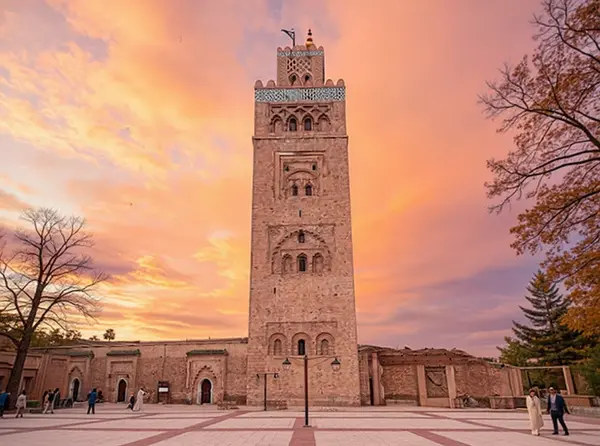
2. Koutoubia Mosque (La Mosquée de la Koutoubia)
La Mosquée de la Koutoubia
A 12th-century minaret and garden landmark defining the Marrakech skyline. Wander through fragrant gardens, admire intricate sandstone carvings, and take golden-hour photos.
Quick facts: A towering minaret rises 77 meters above the cityscape, its ochre stones glowing pink at sunset. Local storytellers say that the surrounding square once hosted hundreds of book traders, a trade that gave the neighborhood a name linked to books.
Highlights: A 77-meter tower inspired Seville's Giralda and Rabat's Hassan Tower, an architectural family you can spot by similar horseshoe arches and brick bands. Climb the gardens at dusk and listen for the mellow call to prayer drifting through orange blossoms, while four metal spheres crown the spire, catching the last light like tiny suns.
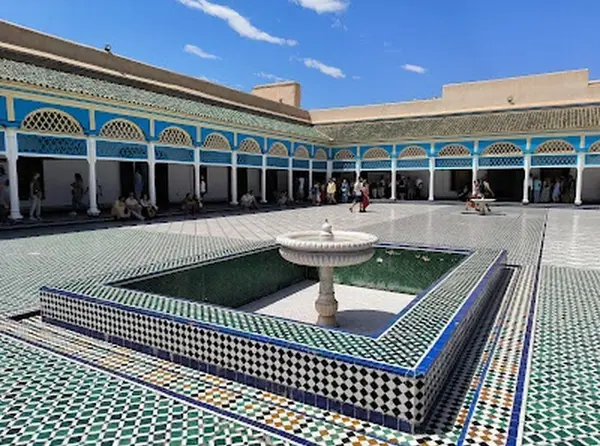
3. Bahia Palace (Palais de la Bahia)
Palais de la Bahia
Luxurious 19th-century Moroccan palace featuring carved cedar, zellij tilework, and leafy courtyards. Explore ornate salons, sunlit riads, and a rooftop with panoramic views.
Quick facts: You can wander through roughly 160 rooms, where carved cedar wood, stucco arabesques, and colorful zellij tiles create shifting patterns of light and shadow. Patronage by Si Moussa and later Grand Vizier Bou Ahmed left opulent courtyards and secret nooks, while orange trees scent the air in sheltered gardens.
Highlights: Slip into the main harem courtyard and watch sunlight turn the painted cedar ceiling cobalt, while a small central fountain whispers under the tang of orange blossom. Local guides often point out roughly 160 rooms and the private apartments of Bou Ahmed, where tiny hidden doors and mirrored panels hint at palace politics and family drama.
Have you heard of free walking tours?
After traveling to 30+ countries, there's one thing I wish someone had told me from day one, and it completely changed how I experience new cities.
Free walking tours. Yes, actually free. No credit card needed. No catch.
Local guide, 2-3 hours
Major sights, hidden gems, local stories
100% tip-based
Guides earn only tips, so they give their absolute best
You tip what feels right
At the end, just tip whatever you feel is right
I've done these in dozens of cities and they've been the highlight of almost every trip. If you're visiting Marrakesh, Morocco, do this on your first day. You'll thank me later.
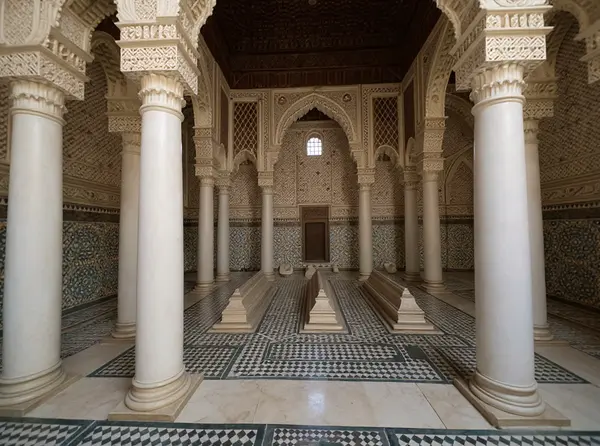
4. Saadian Tombs (Tombeaux Saadiens)
Tombeaux Saadiens
A moody Saadian royal mausoleum with detailed tilework and carved cedar ceilings. Walk through quiet courtyards and decorated chambers glowing with soft light.
Quick facts: Step through a low doorway and you'll find dazzling zellij tiles, carved cedar ceilings, and polychrome stucco packed into surprisingly small chambers. A central hall supported by twelve slender marble columns shelters royal cenotaphs, so the space feels more like an intimate family crypt than a sprawling monument.
Highlights: Peek into the Chamber of the Twelve Columns and you'll find Sultan Ahmad al-Mansur's marble cenotaph surrounded by a dozen slender column shafts, the whole room humming with patterns of turquoise and gold. Soft light filters through tiny latticed windows, picking out hairline veining in the stucco and the faint scent of aged cedar so visitors feel transported into a private royal chapel.
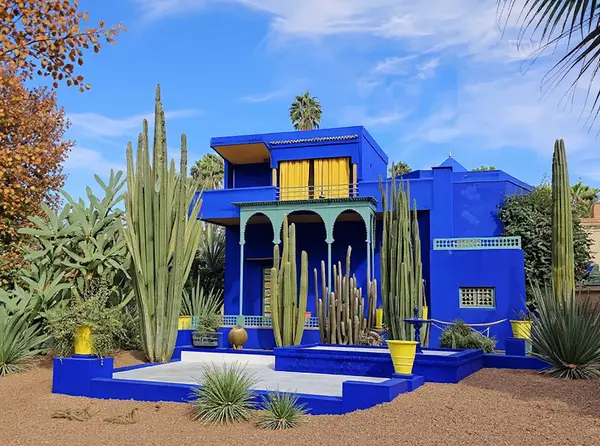
5. Majorelle Garden (Jardin Majorelle)
Jardin Majorelle
A cobalt-blue garden filled with exotic plants and peaceful water features, ideal for escaping the medina. Walk shaded paths, photograph the blue villa, and visit the Berber Museum.
Quick facts: Bold cobalt walls pop against lush green palms and towering cacti, a color mixed by Jacques Majorelle to make the garden feel otherworldly. A painter's private paradise attracted a wave of visitors after being rescued by Yves Saint Laurent and Pierre Bergé, and the grounds host roughly 300 plant species alongside a tiny museum of Berber art.
Highlights: Step into a courtyard drenched in cobalt pigment, where the air smells of orange blossom and mint while a dozen small fountains whisper under palm fronds, making the heat feel softer. Fashion legend Yves Saint Laurent and partner Pierre Bergé bought and restored the neglected property in 1980, famously using their private collection to create a Berber Museum and keep the artist's vivid blue alive.
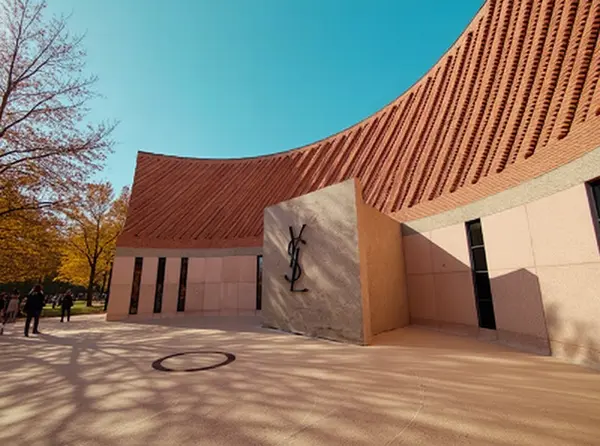
6. Yves Saint Laurent Museum (Musée Yves Saint Laurent Marrakech)
Musée Yves Saint Laurent Marrakech
A striking exhibit of Yves Saint Laurent couture in an elegant Moroccan pavilion. Browse galleries of iconic gowns, original sketches, and a peaceful courtyard with design-focused displays.
Quick facts: Step inside and you'll find over 5,000 haute couture sketches, fabric swatches, and accessories archived together, a backstage pass into the fashion studio's messy brilliance. Low natural light, velvet-lined cases, and deep indigo walls make silhouettes pop, so even a simple toile reads like a dramatic costume under the gallery lights.
Highlights: A recreated atelier corner invites you to peer at a cluttered worktable pinned with fabric bolts and hear an audio loop of the designer's voice, so you can smell muslin, scissors, and feel the pulse of creation. Curators rotate roughly 250 garments each season, and one installation hangs 80 sequined evening gowns under pinpoint lights so the sequins flash like a private constellation.
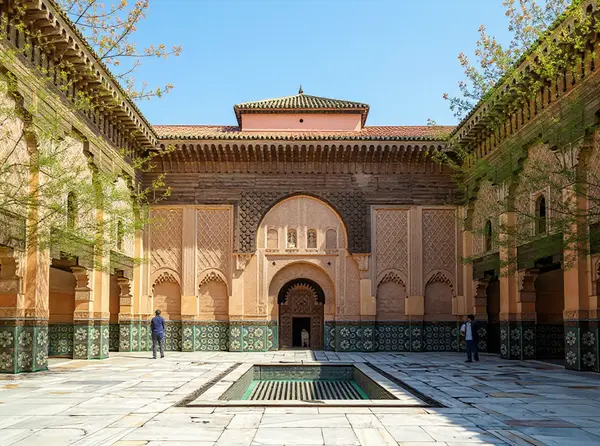
7. Ben Youssef Madrasa (Medersa Ben Youssef)
Medersa Ben Youssef
A stunning 16th-century Islamic school adorned with exquisite zellij, stucco, and carved cedar wood. Walk the quiet central courtyard and look into ornate student cells to see traditional Moroccan craftsmanship.
Quick facts: Light pours into the ornate courtyard, bouncing off thousands of zellij tiles and delicate stucco that shimmer like mosaic skin. Quiet, cell-like rooms ring the courtyard where generations of students studied and slept in very close quarters, leaving behind layers of chalk marks and whispered stories.
Highlights: Walk the upper galleries and count roughly 130 tiny student cells, many barely larger than a single mattress so voices carry and neighborly life is felt, not just seen. Lean in to trace a carved cedar beam and you'll smell resin and lime, while a single clap echoes like a drum across the tiled pool, showing how acoustic design shaped daily study routines.
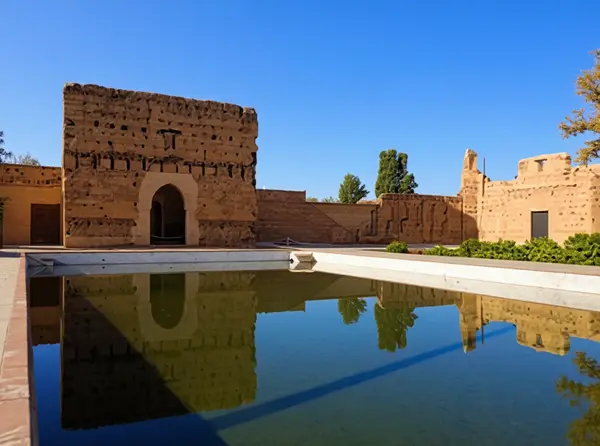
8. El Badi Palace (Palais El Badi)
Palais El Badi
A grand 16th-century palace demonstrating lavish scale and Moorish craft. Explore sunken gardens, ruined pavilions, and climb ramparts for wide city views.
Quick facts: Sun-baked walls and towering rubble give a cinematic feeling, with white storks often perched like feathered sentries on the high bastions. More than 300 craftsmen reportedly worked on lavish decorations using carved cedar, Italian marble, and gold leaf, though only ornate fragments and reflecting pools survive today.
Highlights: Inner courtyards still hold a vast sunken basin that fills with rainwater and mirrors the sky, creating a startling blue reflection against burnt-orange ruins. Legend says Sultan Ahmad al-Mansur imported so much gold and onyx that contemporary accounts mentioned over 6,000 workers and dozens of Venetian marble panels, a lavishness you can almost sense when tracing the worn stone.
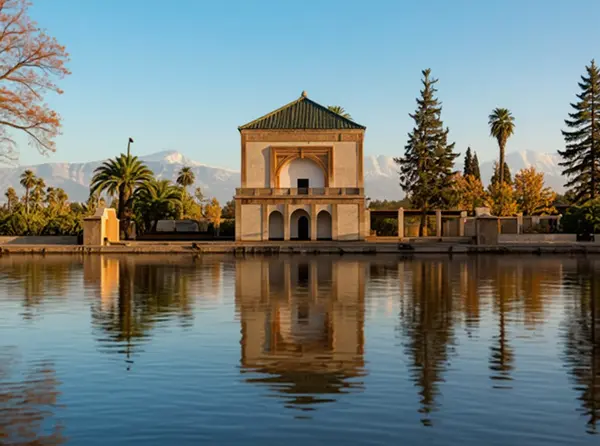
9. Menara Gardens (Jardins de la Ménara)
Jardins de la Ménara
A serene 19th-century olive garden with a large reflective reservoir and views of the Atlas Mountains. Walk shaded paths, spot the pavilion, and photograph the mirror-like basin at sunset.
Quick facts: Olive groves and solitary cypress trees punctuate a broad reflecting basin that often mirrors the snow-capped High Atlas when the sky is clear, giving the whole scene a painterly calm. Local gardeners still use traditional irrigation channels called khettaras, the quiet gurgle of water and the scent of wet earth revive the orchard at dawn and attract migrating birds.
Highlights: An ochre pavilion with emerald tiles stands at the pool's edge, and when the wind drops the shallow basin becomes a mirror so exact that the pavilion's green roof and the distant mountain peaks form a near-perfect circular reflection. Visit at golden hour and you'll hear the soft clink of wooden ladders and see more than a hundred olive trunks casting long finger-like shadows, while the smell of resin and citrus fills the air.
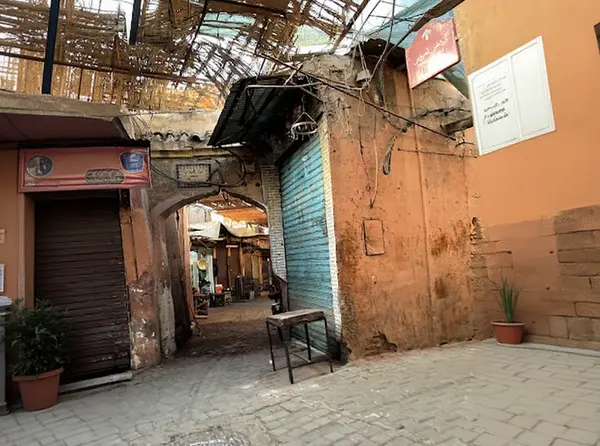
10. Souks of Marrakech (Marrakech Medina Souks)
Marrakech Medina Souks
Winding markets bursting with color and scents where centuries of crafts blend with daily life. Haggle for leather, spices, lamps, and carpets as you weave through narrow alleys.
Quick facts: Narrow alleys brim with an orchestra of smells: cumin, orange blossom water, leather, and frying oil, so wandering becomes a full-senses scavenger hunt. Vendors' calls create a lively soundtrack, and bargaining is expected so final prices can fall by half or more during a good haggle.
Highlights: Seek out the henna artists who draw complex floral mandalas with tiny cones, the paste darkening to deep reddish-brown over 24 to 48 hours and leaving a slightly sweet, resinous scent. Watch a metalworker file a brass lamp, sparks dancing in the shaded alley while a finished lantern's warm, honeyed reflections catch the eye.
Where to Stay in Marrakesh, Morocco
Selected by City Buddy based on guest reviews and proximity to top attractions
Search all hotels in Marrakesh, MoroccoPowered by agoda
Traditional Sweet Dishes
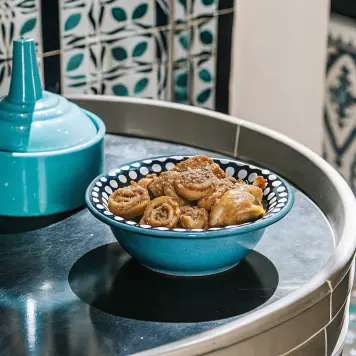
Chebakia
A sesame-and-honey pastry shaped like a fried rose, Chebakia is traditionally prepared in large batches for Ramadan, it is crunchy, sticky, and richly spiced with anise and sesame.
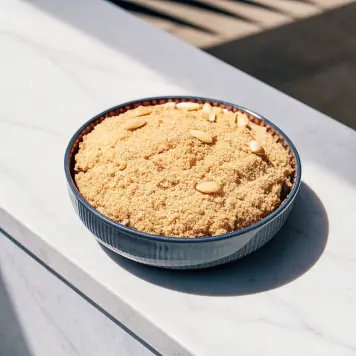
Sellou (Sfouf)
Sellou is a dense, toasted flour and almond mixture flavored with sesame, honey, and spices, it is an energy-rich staple served at celebrations and during Ramadan in Marrakesh.
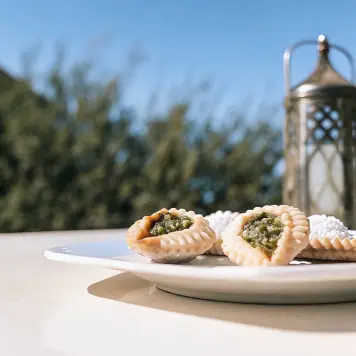
Kaab el Ghzal (Gazelle Horns)
Delicate crescent-shaped pastries filled with almond paste and perfumed with orange blossom water, Kaab el Ghzal are a classic Moroccan sweet often served at weddings and special occasions.
Traditional Savory Dishes
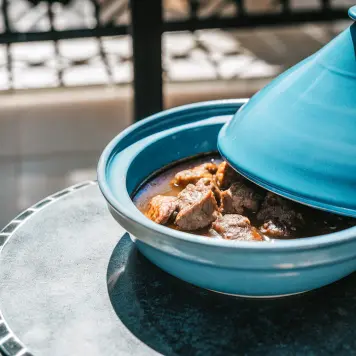
Tanjia
Tanjia is a slow-cooked meat stew prepared in a sealed clay urn and traditionally cooked in communal ovens, it is a signature dish of Marrakshi cuisine with deep, concentrated flavors.
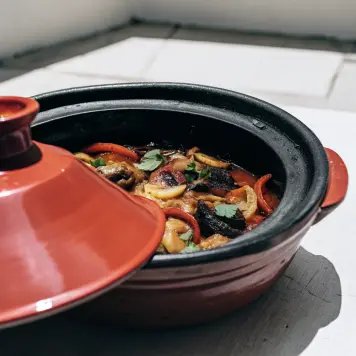
Tagine
Cooked and served in a conical earthenware pot, tagine is a versatile slow-simmered stew that combines meat or vegetables with preserved lemons, olives, dried fruit, and warm spices.
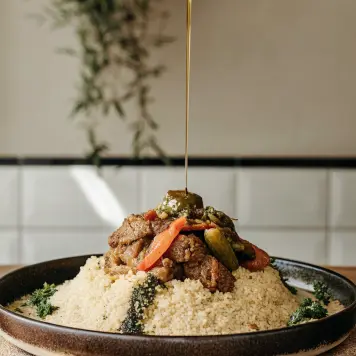
Pastilla (Bastilla)
Pastilla is a savory-sweet pie layered with paper-thin pastry, spiced pigeon or chicken, and toasted almonds, it is an elaborate, celebratory dish often associated with Marrakesh's rich culinary traditions.
Traditional Beverages
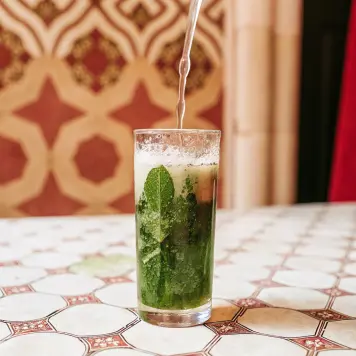
Moroccan Mint Tea (Atay)
Green tea brewed with generous sprigs of fresh mint and sugar, Moroccan mint tea is poured from a height to aerate the brew and is the ritual drink of hospitality across Marrakesh.
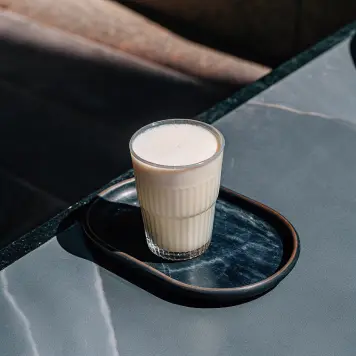
Lben (Buttermilk)
Lben is a slightly sour, fermented buttermilk that is both refreshing and cooling, it is commonly drunk with meals to aid digestion in the hot Moroccan climate.
Fresh-Squeezed Orange Juice
Stacks of locally grown, sweet oranges are pressed to order in Jemaa el-Fnaa and other markets, the bright, fragrant juice is a beloved, ubiquitous street refreshment in Marrakesh.
Frequently Asked Questions about Marrakesh, Morocco
Is Marrakesh, Morocco safe for travelers?
How many days should I spend in Marrakesh, Morocco?
What is the best time to visit Marrakesh, Morocco?
Is Marrakesh, Morocco expensive to visit?
How to get around Marrakesh, Morocco?
Get a PDF with the most popular attractions sent to your email
Get a PDF with all attractions, ratings, and tips. Perfect for offline use.
Most popular day trips
Essaouira
Windy Atlantic medina, beaches, fresh seafood, artisan shops.
Imlil (Toubkal)
Base for Toubkal treks, mountain views, small villages.
Agafay Desert
Rocky desert, sunset tours, camel and quad rides near the city.
Rent a car in Marrakesh, Morocco
Getting there
Airports
Train stations
Main ONCF lines to Casablanca, Rabat, Fes
From Menara Airport take a taxi or the airport shuttle to central Jemaa el-Fnaa; agree taxi price or use the meter.
Find flights to Marrakesh, Morocco
Click to get eSim for Marrakesh, Morocco
The easiest and most affordable way to get mobile internet wherever you travel.
Useful information for Marrakesh, Morocco
Overview for Marrakesh, Morocco
Most popular itineraries for Marrakesh, Morocco
Browse trip plans created by other travelers
4-Dnevni Marakeš za avanturiste: Kultura, istorija i skriveni uglovi grada
Četiri dana istraživanja Marakeša kroz besplatne ture, autentične ulične ukuse, drevne medrese i zaboravljene bašte - uz budget koji neće opteretiti tvoj ranac.
5-dagers Marrakesh for kultur- og historieentusiaster
Oppdag Marrakeshs rike historie og kultur, fra ikoniske palasser til lokale skjulte perler, med guidede turer og autentiske opplevelser utenom allfarvei i den vakre vårsesongen.
5-Day Marrakesh Spring Journey for Cultural Backpackers
Discover Marrakesh's rich history, vibrant culture, and local secrets on a budget with authentic experiences off the beaten path.
Comments (11)
Crazy vibrant markets, intense heat in July, food is amazing if you wander away from the tourist stalls, spend 3 days minimum to absorb it.
Medina nights are magic, spices and riads felt unreal. Food stalls beat fancy restaurants for flavor, but expect crowds in the square.
Avoid eating by Jemaa el-Fnaa at night, walk three streets east and you'll find cheaper tagines. Visit Bahia Palace early to beat the tour groups.
Food was unreal, tagines and mint tea everyday, but cash is king and I burned through notes faster than expected.
Hot in summer, enough dust and noise to bother light sleepers, but sunset on the rooftop cafes made the chaos worth it for me.